If you are buying in Palisade, irrigation access can be one of the most important details to get right. In a place known for orchards, vineyards, and larger irrigated parcels, water is not just a nice extra. It can shape how you use the land, what responsibilities come with ownership, and what questions you need answered before closing. This guide will help you understand how irrigation works in Palisade, what to verify during due diligence, and how to buy with more confidence. Let’s dive in.
Why irrigation matters in Palisade
Palisade’s agricultural identity is closely tied to irrigation. According to the Mesa County Hazard Mitigation Plan, the area is arid and receives about 9 inches of precipitation each year. That limited rainfall is one reason irrigation has long played such a central role in how land is used.
The same plan notes that early orchards grew here because of accessible water, rich soil, and a favorable climate. It also points to the Highline Canal as an important piece of infrastructure that helped support the local fruit-growing economy. If you are buying a home with acreage, a large yard, or any agricultural use in mind, irrigation may be essential to how the property functions.
Palisade’s rural landscape is also part of long-term planning for the area. Mesa County’s rural planning policies emphasize preserving agricultural landscapes and protecting the area’s rural character. That means irrigation access can be part of the property’s ongoing utility, but it should not be confused with guaranteed development flexibility.
How irrigation works locally
In Palisade, irrigation access is not always as simple as a listing saying a property has water. The actual structure can vary, and that distinction matters. In the Palisade Irrigation District FAQs, the district explains that it holds the water rights for land within the district and allocates each parcel a proportional share, generally about 1/3 to 1/2 of a Colorado miner’s inch per acre, depending on water availability.
The district also says water is attached to the land and water shares are not transferable. That is important because not all Colorado irrigation systems work the same way. As Colorado State University Extension explains, some water systems involve shares in a mutual ditch or reservoir company that can be sold or transferred, while district-based entitlements are often attached to the parcel unless changed by district action.
For you as a buyer, the takeaway is clear: do not assume all irrigation access is legally structured the same way. A property may have water available, but the form of that right or entitlement needs to be verified in writing before you rely on it.
Know the local delivery system
The local infrastructure is extensive. The Palisade Irrigation District says it delivers Colorado River water to vineyards, orchards, and other agricultural uses in the eastern Grand Valley. Water is diverted at Cameo Diversion Dam, carried through the Government Highline Canal, and delivered through the Price Ditch.
Other local systems matter too. Grand Valley Irrigation Company notes that its canal system serves about 40,000 acres from Palisade to Mack, and drainage infrastructure also plays a role in moving groundwater, irrigation water, and stormwater back to the river. For buyers, this is a reminder that irrigation is part of a broader operational network, not a stand-alone feature on one parcel.
The district also notes that irrigation water is raw water, not potable water, and delivery is seasonal. Spring runoff and storms can bring silt and debris into the system, which can affect filtration and pump protection. If the property uses pumps, filters, valves, or above-ground equipment, you will want to know how the system is set up and what seasonal maintenance is required.
What responsibilities may come with irrigation
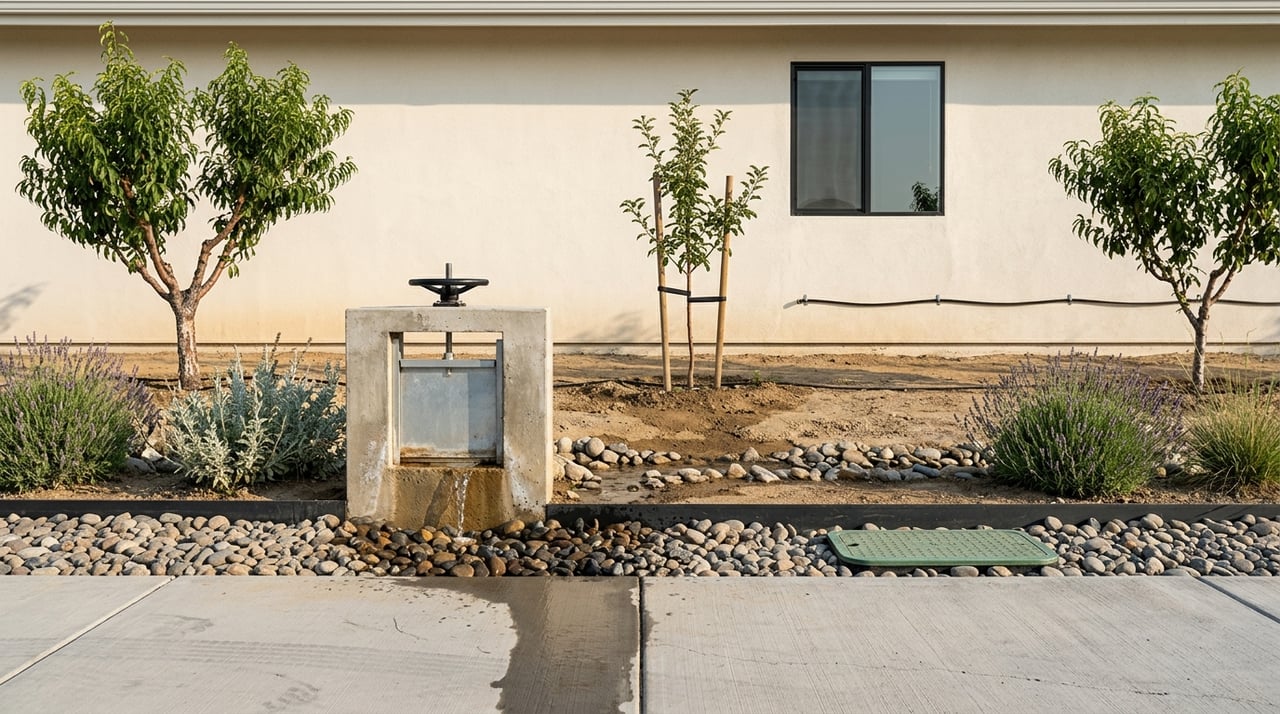
Irrigation access can be a major benefit, but it also comes with obligations. In the Palisade Irrigation District, some laterals are maintained by the district, while private laterals are maintained by the users on that lateral. That means two homes with irrigation access may have very different maintenance responsibilities.
The district also says that some homeowners in subdivided areas may still owe district assessments even if a developer never built an internal delivery system. In some cases, water may only be available at the historical point of delivery. This is one of the most important reasons to look beyond the marketing language and confirm exactly how water reaches the parcel today.
Because the system may require rotation on certain laterals, irrigation timing can also be a practical issue. The district explains that its rights are not enough for all users to irrigate at the same time, so rotation may be necessary. If you are planning for an orchard, vineyard, pasture, or even a large irrigated yard, that schedule can matter.
Due diligence questions to ask before closing
If you are considering a home with irrigation access in Palisade, these are smart questions to ask before closing:
- Is the property in the Palisade Irrigation District, another irrigation district, or a ditch company?
- What exactly transfers with the sale?
- Is the irrigation supply attached to the land, or does it depend on a separate share certificate or contractual entitlement?
- What are the annual assessments?
- Are there HOA rules, irrigation cooperative rules, or delivery limitations?
- Who maintains the laterals, valves, pumps, or drainage ditches?
- Are there easements or access routes needed for maintenance?
- Where is the historical point of delivery?
- Is irrigation subject to rotation on this lateral?
These questions are grounded in guidance from the Palisade Irrigation District FAQs and CSU Extension’s water rights resource. They can help you understand not only whether water exists, but how usable and reliable it may be for your goals.
Check water quality and timing
Water quantity is only part of the picture. Water quality can affect productivity, equipment, and maintenance needs. CSU Extension’s irrigation water quality guidance notes that irrigation water quality can influence agricultural productivity in many parts of Colorado.
In Palisade, the district says its water comes directly from the Colorado River, where runoff and storms can bring in silt and debris. If the property relies on pumps, drip systems, filters, or sensitive equipment, it is wise to confirm how the current owner manages sediment and protects the system.
Timing matters too. Because irrigation delivery is seasonal and operationally managed, you should ask when the season typically starts and ends, whether winter draining is required, and who operates the valves or controls. These details can affect day-to-day ownership more than many buyers expect.
Understand wells and augmentation plans
Some Palisade properties may include a well in addition to surface-water irrigation. If that is the case, make sure the intended use is actually allowed. The Colorado Division of Water Resources says augmentation plans are commonly needed in many parts of Colorado when wells are used for lawn and garden irrigation, domestic animals, subdivisions, or similar uses.
That means a well does not automatically replace or expand what you can do with irrigation water. If a property has mixed residential and agricultural use, both the well permit and any augmentation requirements deserve close review. This is especially important if you are buying acreage with plans for outdoor watering, animals, or hobby agriculture.
Why written verification matters
Colorado water law follows prior appropriation, often described as first in time, first in right. The Colorado Division of Water Resources explains that water rights may only be exercised when they are in priority. In practical terms, seniority and legal structure can affect how dependable a water supply is during shortages.
That is why written verification matters so much. CSU Extension notes that buyers should determine whether the property has its own decreed water right or depends on an outside water entity. If a listing mentions irrigation, the safest path is to verify the exact delivery structure, transfer terms, and supporting documents before you commit.
Irrigation and property value
Irrigation can influence both how land is valued and how it is used. According to Colorado’s Assessors’ Library guidance on agricultural land, water rights and associated structures and devices must be assessed with the land as a unit. The guidance also notes that if irrigation water is permanently removed, reclassification may be appropriate only after the actual loss of irrigation is documented.
That distinction can matter if you are buying a property for agricultural use, lifestyle use, or long-term hold value. The same assessor guidance says orchard operations and vineyards can qualify for agricultural designation when the trees or vines are grown in soil, cultivated and fertilized periodically, and harvested for profit. In other words, irrigation access may support certain uses and classifications, but actual use still has to fit the rules.
For many buyers, irrigation adds both utility and appeal. It can support orchards, vineyards, gardens, and larger irrigated outdoor spaces. At the same time, it also brings assessments, maintenance, seasonal operations, and legal details that deserve careful review.
A practical way to buy with confidence
When you buy a home with irrigation access in Palisade, you are not just buying land. You are also stepping into a water delivery system with its own rules, timing, infrastructure, and responsibilities. The smartest approach is to treat irrigation due diligence as a core part of the transaction, not an afterthought.
A strong process usually includes reviewing district information, confirming transfer details with the title company, and getting legal guidance when the water structure is unclear. For properties with more complex acreage, mixed-use features, or special irrigation improvements, it can also be reasonable to involve a Colorado water attorney before closing. That extra step can help you avoid surprises and move forward with clarity.
If you are weighing acreage, orchard properties, or homes with irrigation questions in Palisade, The Agency Grand Junction can help you navigate the buying process with a local, detail-driven approach.
FAQs
What does irrigation access mean for a home in Palisade?
- Irrigation access usually means the property has some form of seasonal raw-water delivery for outdoor or agricultural use, but the exact legal structure, delivery point, and responsibilities should be verified before closing.
Is Palisade irrigation water drinking water?
- No. The Palisade Irrigation District states that its irrigation water is raw water, not potable water.
Do irrigation rights transfer automatically with a Palisade property?
- Not always in the same way. In the Palisade Irrigation District, water is generally attached to the land, but buyers should still confirm in writing what transfers with the sale and how the water supply is structured.
Can a Palisade property with irrigation still have maintenance responsibilities?
- Yes. Depending on the parcel, you may be responsible for private laterals, pumps, valves, drainage features, or seasonal winterizing tasks.
Should buyers verify wells separately from irrigation access in Palisade?
- Yes. If a well is part of the property, you should confirm the permitted uses and whether an augmentation plan is required for your intended outdoor or agricultural use.